Body-based therapies can help cancer patients heal


Fact checked by Derick Wilder
Maryanne Hewitt was in the shower in 2014 when she noticed a lump in her breast. She was 43 years old and had no family history of breast cancer. She had just started a new career. Her children were in high school.
A biopsy revealed the cancer’s aggressive form, so over the next year and a half, Hewitt underwent a double mastectomy, chemotherapy, and reconstructive surgery. She missed a lot of her children’s activities. As a dancer and an artist, she questioned whether she could continue those parts of her life or if she had to remain purely in survival mode.
“It was quite a journey, and traumatic,” says Hewitt, a consultant for architecture and design firms. “The way that I typically deal with trauma is to compartmentalize, put the to-do list together, and get through it.”
She has only begun to process that trauma in the past year, she says, even though her diagnosis happened 12 years ago. “I’ve really started to feel like myself again, and embrace who I am. What are the pieces of myself from before the journey that are still valid?”
A cancer diagnosis and treatment can be traumatic, and about 20% of people with cancer experience post-traumatic stress disorder (PTSD) symptoms long after treatment ends.
Those symptoms vary from person to person. Stress, anxiety, sadness, or numbness can linger. People can experience poor sleep, fatigue, chronic muscle tension, or an exaggerated startle response. They may experience “scanxiety,” with racing hearts and thoughts before follow-up scans.
Some want to remain closely connected to their care teams; others avoid hospitals altogether. Many experience a disconnect between mind and body and struggle to reconcile their emotions with their experience.
Psychotherapy and body-based therapies such as yoga, dance, or tai chi support emotional healing.
“Anything body-based, especially when you’re going through something traumatic, actually helps to move it through your system rather than sitting in it all the time,” says Alexandria Callahan, PhD, behavioral health therapist and dance/movement therapist at City of Hope Cancer Center Chicago.
Trauma affects the nervous system, leaving some people in a heightened state of alertness that contributes to anxiety and fatigue. Body-based therapies help address those effects.
“When we think about movement and body-based therapies, they recognize that stress and trauma manifest physically as well as emotionally and cognitively,” says Lauren Rynar, PhD, director of supportive oncology at Rush MD Anderson Cancer Center. “They’re designed to regulate the nervous system so that we can effectively notice when we are entering that activation state, and we have the skills to use our bodies to calm our bodies, as well as our minds.”
Movement and body-based therapies can also alleviate chronic tension, physical symptoms of cancer or treatment, and fatigue, a common side effect of cancer treatment.
“We know that exercise is well-studied as a primary intervention for fatigue,” Rynar says. “There are also studies regarding how exercise is associated with better cancer results and overall survival across several cancer populations.”
One way to get moving is through yoga therapy, a one-on-one practice that tailors yoga to an individual’s needs. In La Grange, Jaime Lewis, hospice medical director for Loyola Home Care and Hospice, is a licensed yoga instructor. She guides cancer survivors through yoga poses to address physical and emotional challenges. She began her practice five years ago and says she has seen significant improvements in some clients.
One of her clients developed neuropathy following various cancer treatments. She walked with a cane and no longer drove. Lewis worked with her physically and also helped her reframe her anxiety in subtle shifts. Instead of saying she was afraid of falling, for example, Lewis encouraged her to say she was mindful of how she walked.
“You start to change those negative thoughts that are common with trauma, those recycled negative thoughts throughout the day, to more positive thoughts,” she says. “Then you start to see those positive thoughts in action.”
After about two years of working together, the client stopped using her cane. Then she started driving again.
“It was overcoming fear, and then improving the neuropathy pain in her feet, and being able to move more confidently,” Lewis says.
For Hewitt, the mind-body connection was always clear, but returning to the physical activities she loved before her cancer diagnosis didn’t feel right.
“My mind was not connected and aligned with my body,” she says. “In fact, I was kind of angry with my body. Like, why did it do this to me?”
She returned to tap dancing a few years ago but decided it no longer fit who she was. She recently tried Pilates and loved it.
“It is not something from my past,” she says. “It’s part of stepping into who I am now and not trying to resurrect other things.
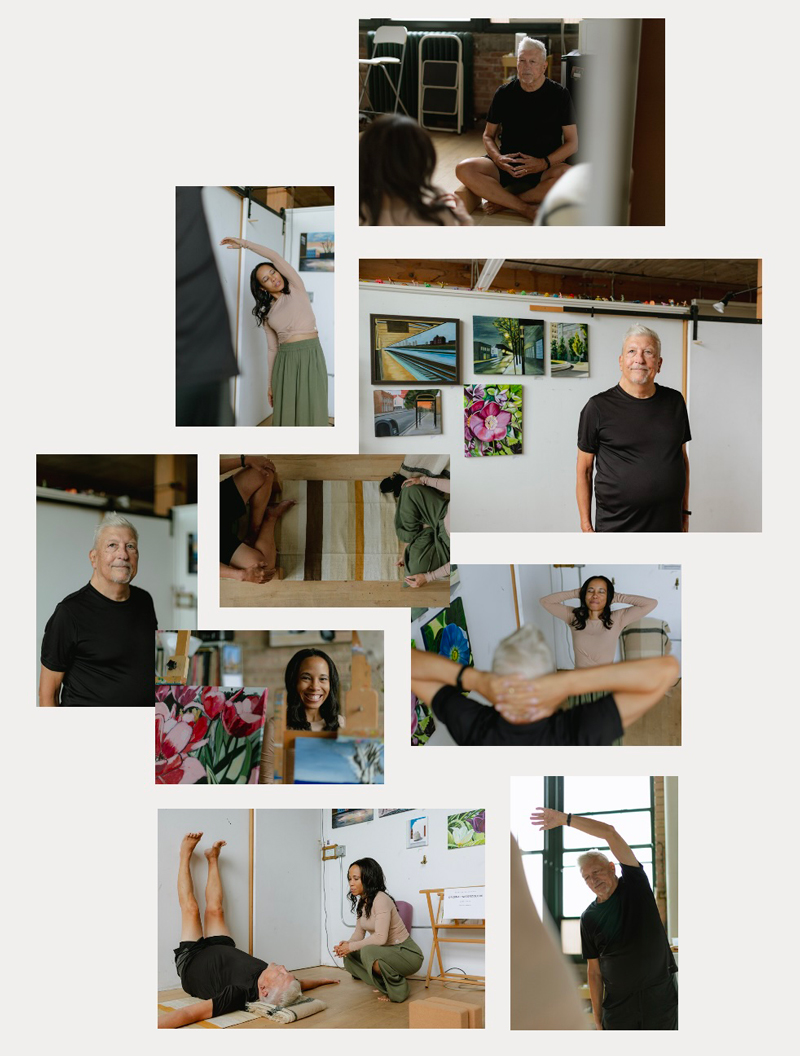
Above photo: Jaime Lewis, Hospice Medical Director for Loyola Home Care and Hospice and licensed yoga instructor, works with a client. Photos by Jim Vondruska
Originally published in the Fall 2026/Winter 2027 print issue.

Susan Cosier is a Chicago-based writer focused on science and the environment. Her work has appeared in Scientific American and Science.